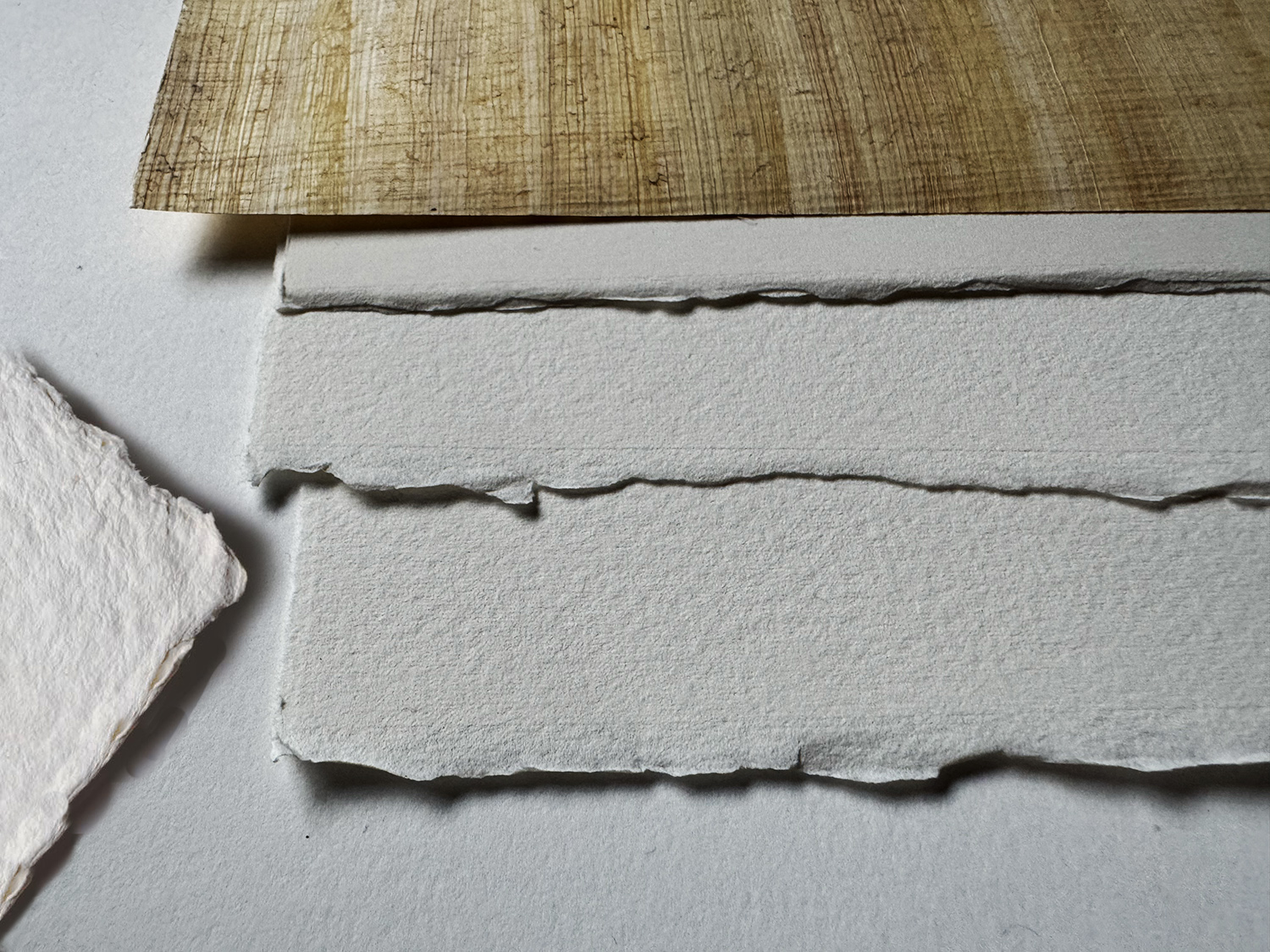
Paper as a Landscape
Paper is often treated as a surface — a blank space waiting for an image.
But in alternative processes, the paper is part of the image.
It has a grain, a direction, a geography.
Some papers have long, soft valleys that pull chemistry into them.
Others have tiny, sharp peaks that catch the brush, leaving a record of your hand.
Texture becomes terrain. Absorption becomes weather.
The image doesn’t sit on the paper; it settles into it.
When you start to see paper as a landscape, everything changes.
You choose not just a material but a place: rough or smooth, warm or cold, wild or controlled.
Some papers feel like open fields, others like stone or sand.
And just like real landscapes, each sheet behaves differently.
Each print becomes a small topography of light and process — unique, impossible to repeat.
In a world of flat, flawless screens, paper reminds us that photographs have a physical home.
And sometimes, that home shapes the image as much as the maker does.